Open Shelving or Cupboards? Choosing Your Kitchen Storage
Storage is one of the parts of a kitchen that has to be right. It determines how well the room works, but it also has more effect on how the kitchen looks than almost anything else, because it decides how much of what you own is on show. There are broadly two approaches: hide everything behind doors and drawers, or put some of it on display. Most good kitchens use both, and the skill is in deciding which goes where.
Open Shelving or Cupboards at a Glance
Closed storage, cupboards, drawers, larders and appliance cupboards, keeps the kitchen calm and the lines clean, and it hides everyday clutter. Open shelving shows off what you own and makes a kitchen feel lighter and more personal, but it gathers dust and grease and has to be kept tidy. The practical answer for most kitchens is closed storage for the bulk, with open shelving used sparingly, away from the hob, for things that are both used daily and good to look at. Glass-fronted cabinets give the look of open storage with the protection of a door. Handmade Kitchen Company design and hand-build both from our workshop in Essex.
Closed storage
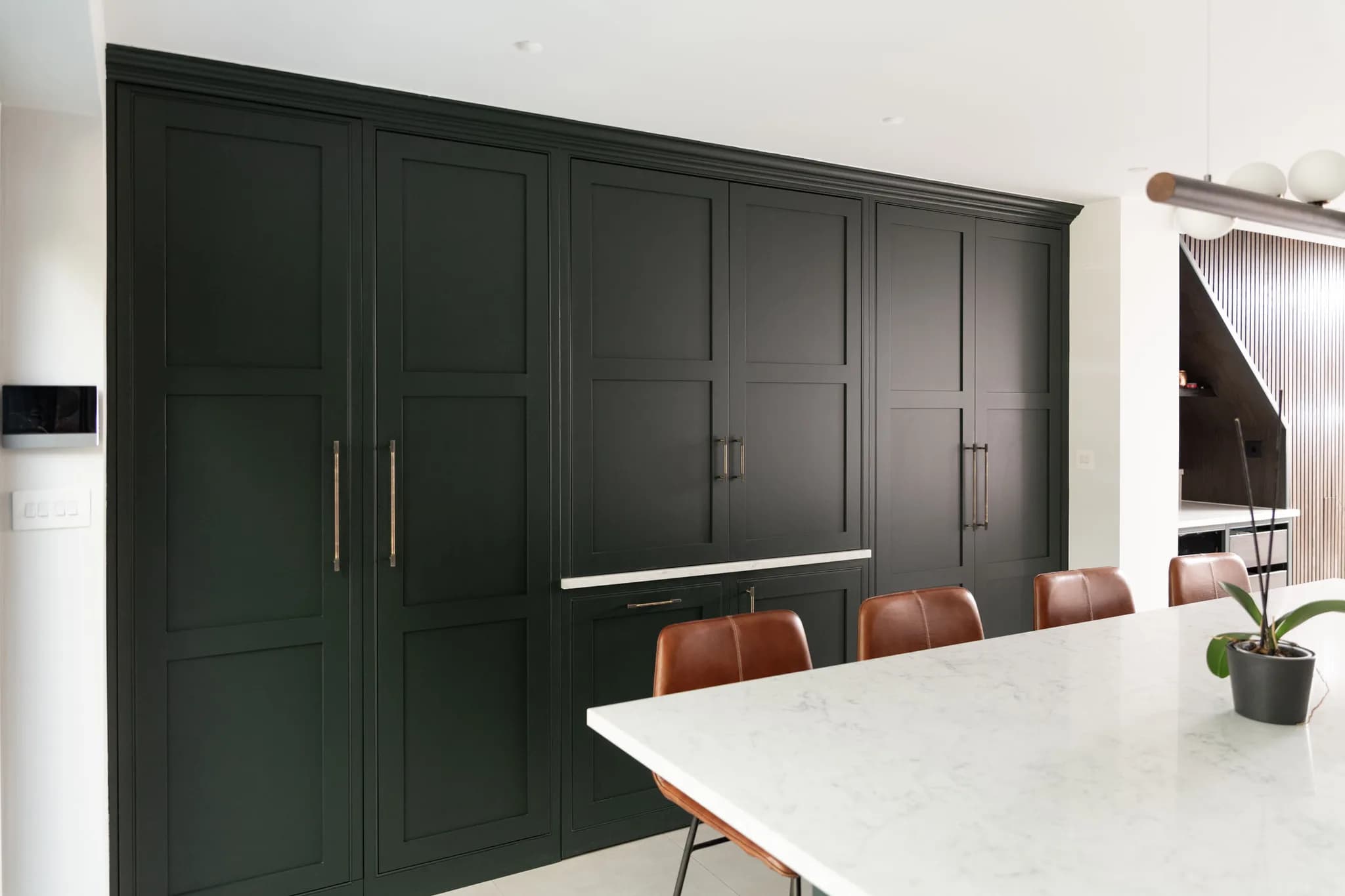
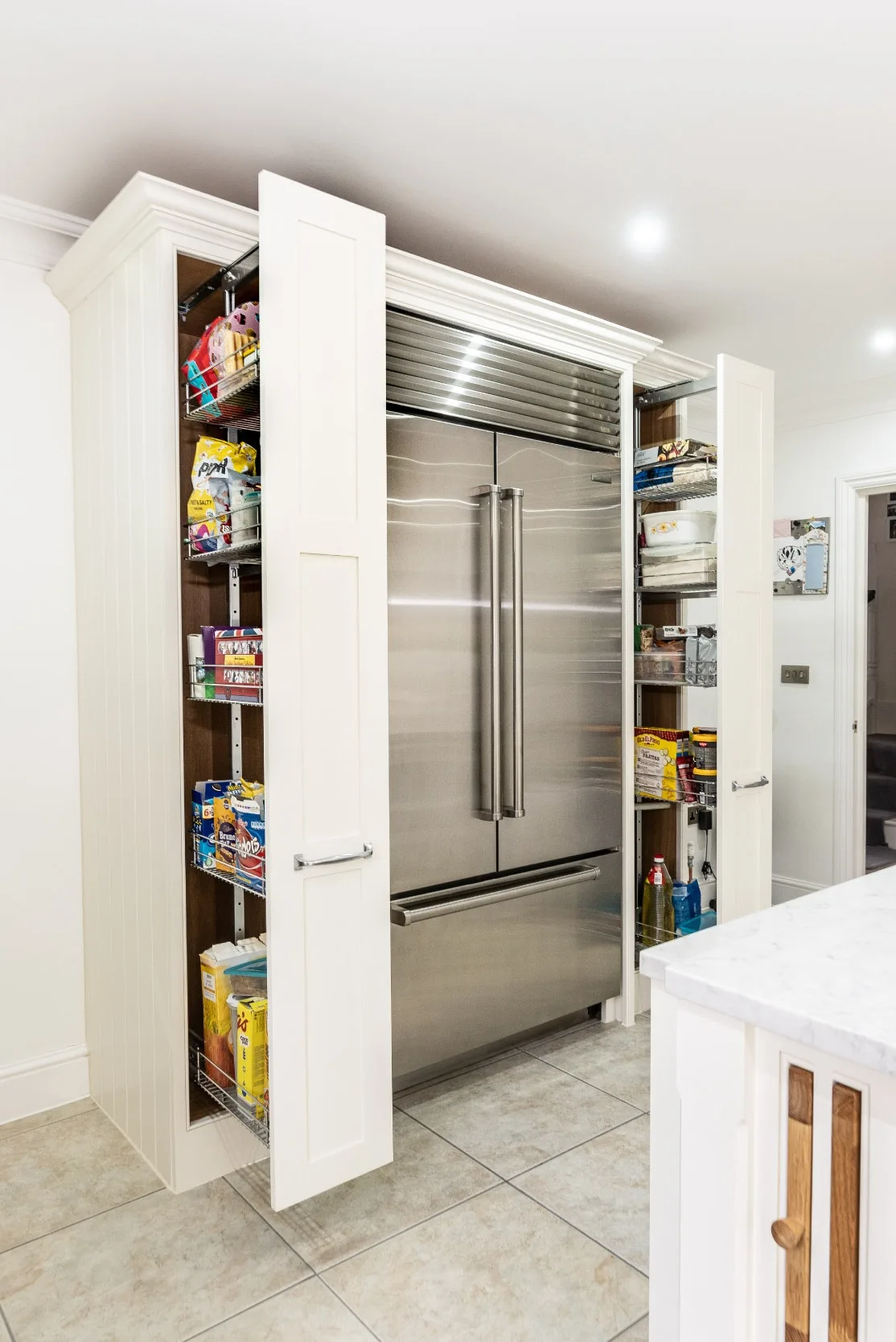
Built-in, hidden storage keeps the contents of cupboards and drawers out of sight, preserving the clean lines of the kitchen and cutting visual clutter. Think in terms of groups rather than individual units. Drawers placed above or below cupboards keep related things together, cutlery near crockery, for instance. Hidden internal drawers inside a deeper drawer give extra organised storage in a kitchen of any size. Where space is tight, drawers can go into the plinth, the dead space at floor level beneath the cabinets. Full-height pull-out larders either side of the fridge freezer put dry and chilled food in one place, which makes cooking noticeably easier on a busy day. In larger kitchens, frequently used appliances can live behind bi-fold doors, accessible when needed and closed away when the worktops need to be clear. Many clients choose a
for this, open on a busy morning and shut when entertaining. Whichever you choose, keep the lines of the cupboards and appliances aligned. When door heights and appliance edges do not line up, the whole kitchen looks unsettled.
Open shelving
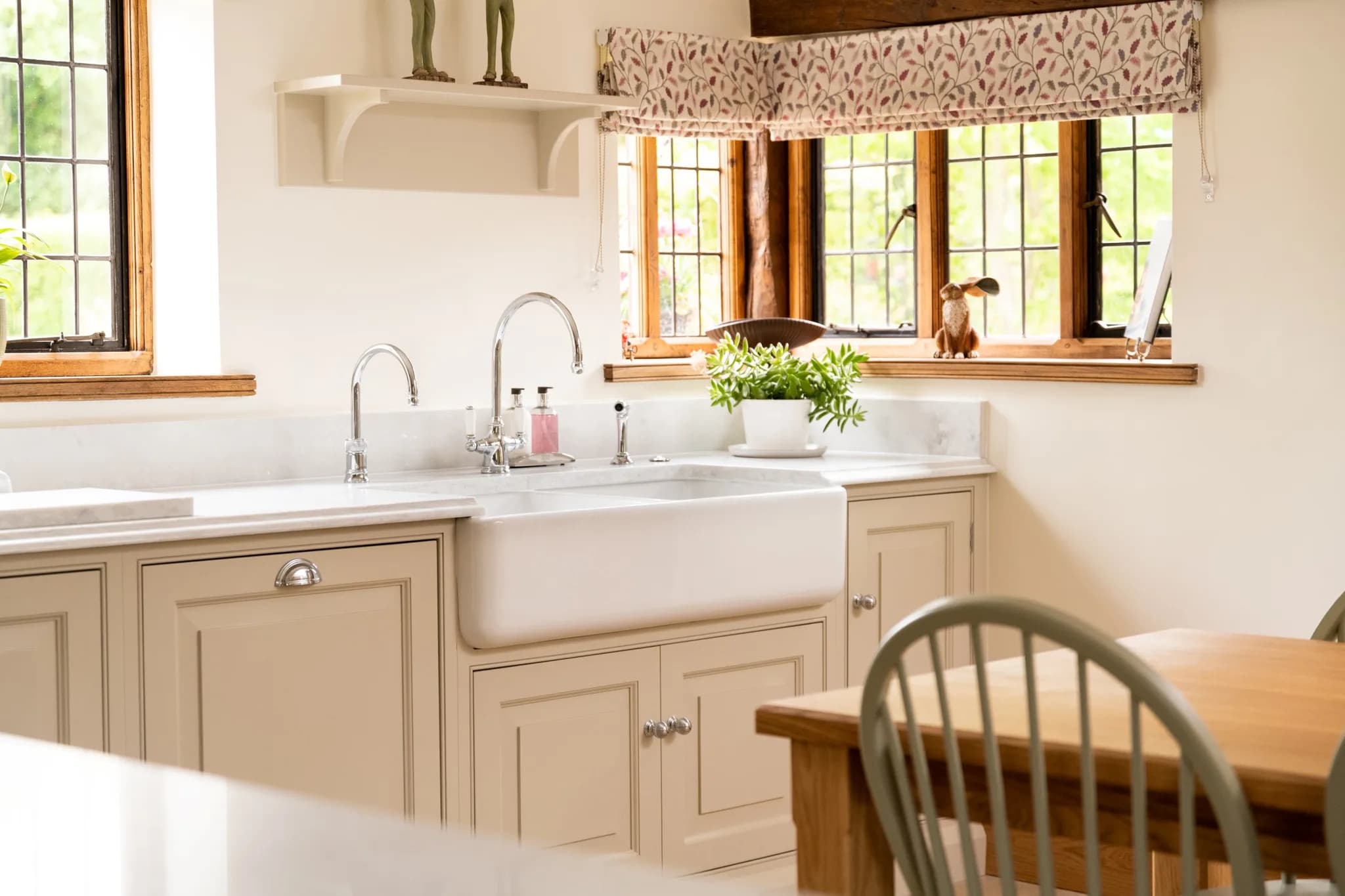
Open shelving remains popular, particularly thick floating shelves, but it comes with honest drawbacks. It collects dust and, near the hob, grease, and it has to be kept tidy all the time or the kitchen starts to look cluttered. Think about what will go on it. A few everyday pieces look good; plates stacked high with glasses and bowls crowded either side look untidy and are awkward to use. Position matters too. Too close to the cooking and everything on it gets dirty; too far away and it stops being practical. Open shelving suits some styles better than others, particularly industrial kitchens and French country schemes, where
and plate racks are part of the look. For shelving in pantries and boot rooms, see our post on
.
Getting the look with less upkeep
If constant dusting puts you off, there are three ways to get the effect of open storage with less work:
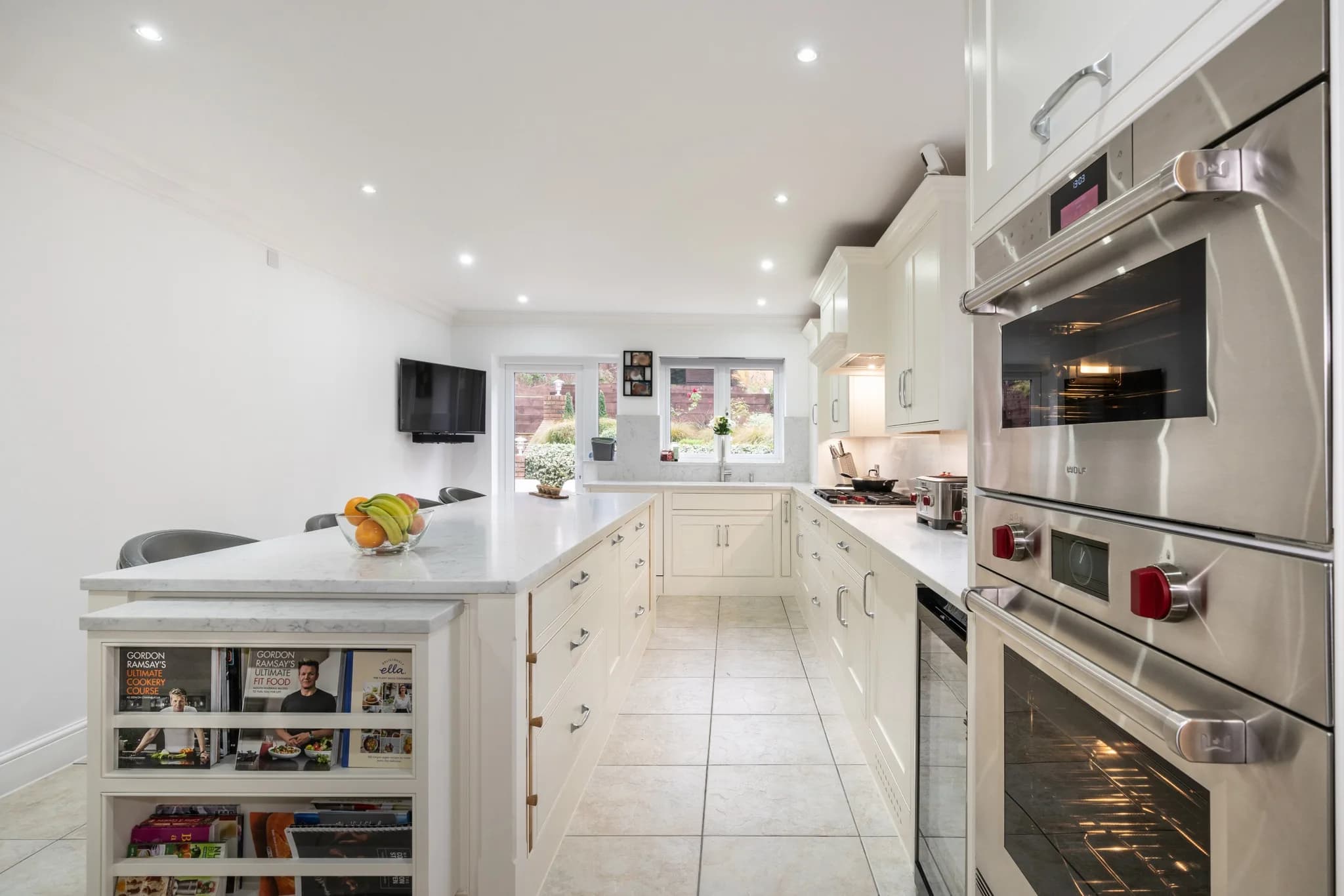
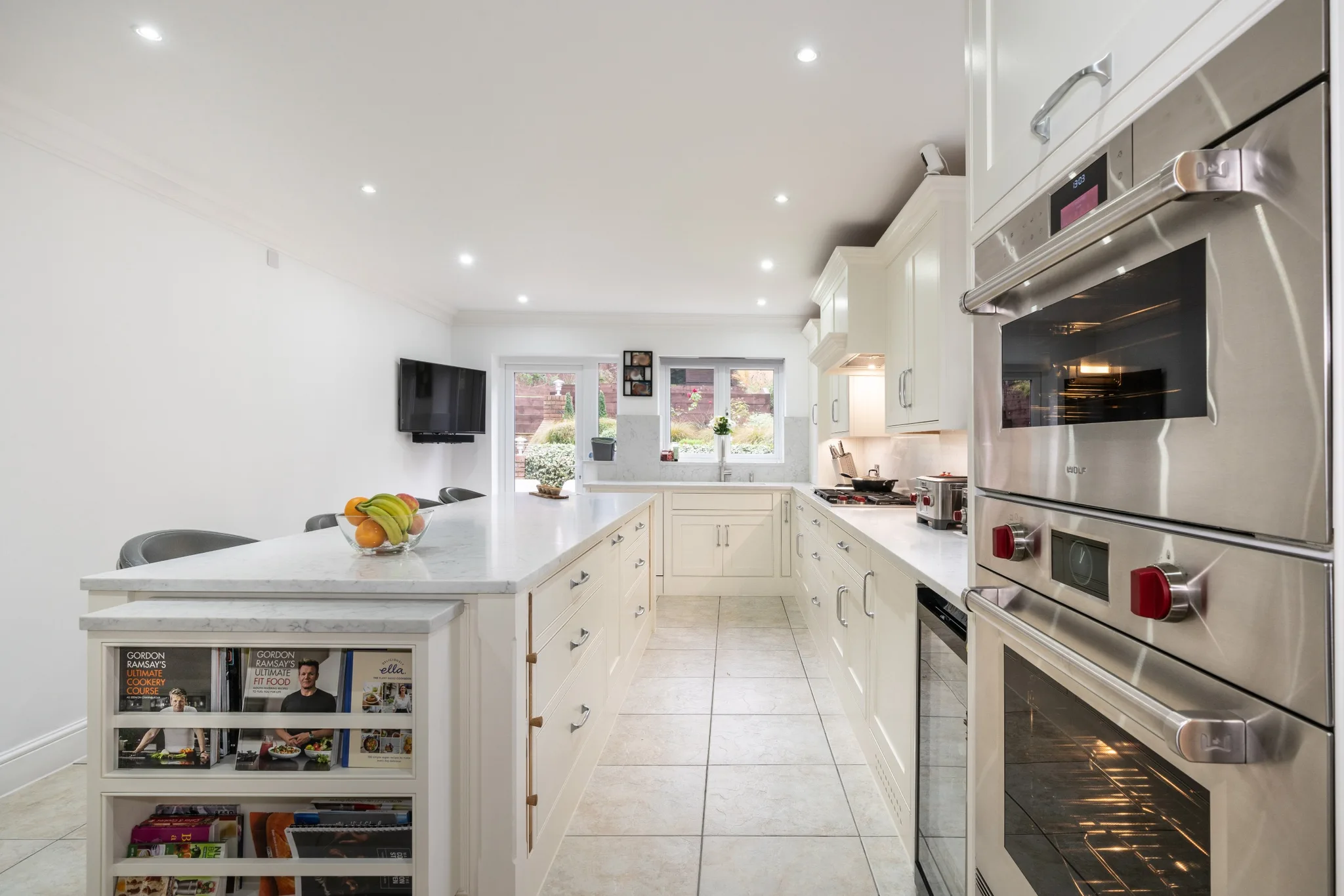
- A small amount of open shelving below the worktop, for example at the end of an island, where it is out of the way of cooking splashes
- Glass-fronted cabinets, which show the contents but keep the dust off
- A utensil rail for spatulas, colanders and pans, which gives an industrial feel and needs far less upkeep than a full shelf
Kitchen Storage FAQs
Is open shelving in a kitchen a good idea?
In moderation. It works well for a few everyday items you are happy to see and use often, positioned away from the hob. As the main storage in a kitchen it tends to become cluttered and needs constant cleaning.
How do you keep open kitchen shelves clean?
Keep them away from the hob, where grease settles; store things you use daily, so they are washed regularly rather than sitting; and keep the number of items low. Glass-fronted cabinets are the alternative if you want the display without the dust.
What are plinth drawers?
Shallow drawers built into the plinth, the strip at floor level beneath the base cabinets. They use space that is otherwise wasted and suit flat items such as trays, baking sheets and table linen.
Where should open shelving go in a kitchen?
Away from the hob and the sink, ideally near where the items on it are used. The end of an island, a wall beside the dining area, or either side of a window are common positions.
Where does Handmade Kitchen Company design kitchens?
We design, hand-build and hand-paint bespoke kitchens and storage from our workshop in Essex, for clients across Essex, Hertfordshire and North London. If you would like to know more about handmade storage for your kitchen,
today. We look forward to hearing from you.