Using Glass in Kitchen Design: Five Ways to Bring in Light
Designers and architects planning a kitchen, and the room around it, almost always want more light. Colours and finishes come and go, but glass stays in demand because it does something nothing else in the kitchen can: it lets light through or bounces it back. That matters most on new builds and renovations, where the glazing is being decided at the same time as the kitchen. Below are the ways we most often bring glass into a handmade kitchen.
Glass in Kitchen Design at a Glance
Glass works in a kitchen in five main places: the building itself, through bi-fold doors and roof lanterns; the splashback, as toughened glass or antique mirror; the hob, where a glass-ceramic induction surface reads as part of the worktop; the cabinetry, as clear, reeded or fluted glazed doors; and the island, as a raised glass bar. Each either admits light or reflects it, which makes a room feel larger and brighter than its footprint. Handmade Kitchen Company design and hand-build kitchens around these choices, from our workshop in Essex.
Glazed doors and roof lanterns
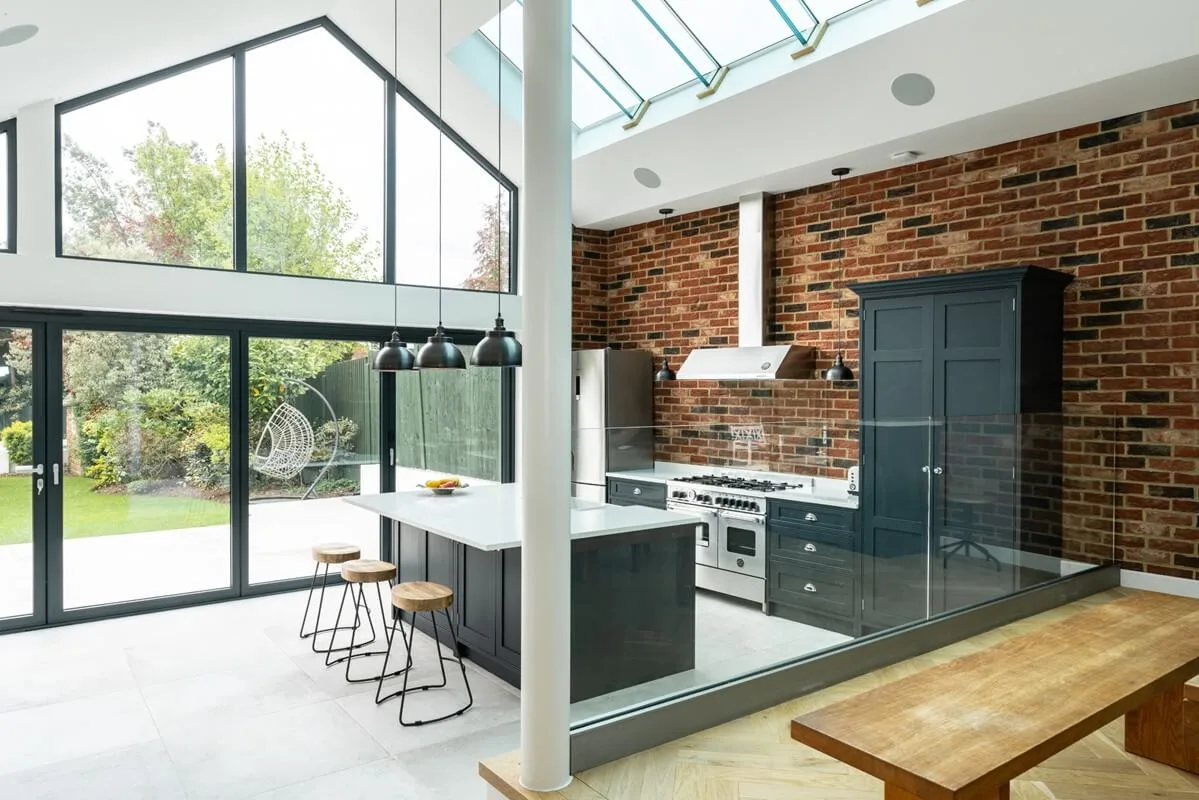
Bi-folding doors and roof lanterns are now two of the most common choices for anyone building or remodelling a kitchen. A roof lantern is usually positioned over the island or the dining table, which puts daylight exactly where people gather and work. If you are planning either, it affects the kitchen layout, so it is worth involving the kitchen designer while the glazing is still being specified rather than after.
Glass and antique mirror splashbacks
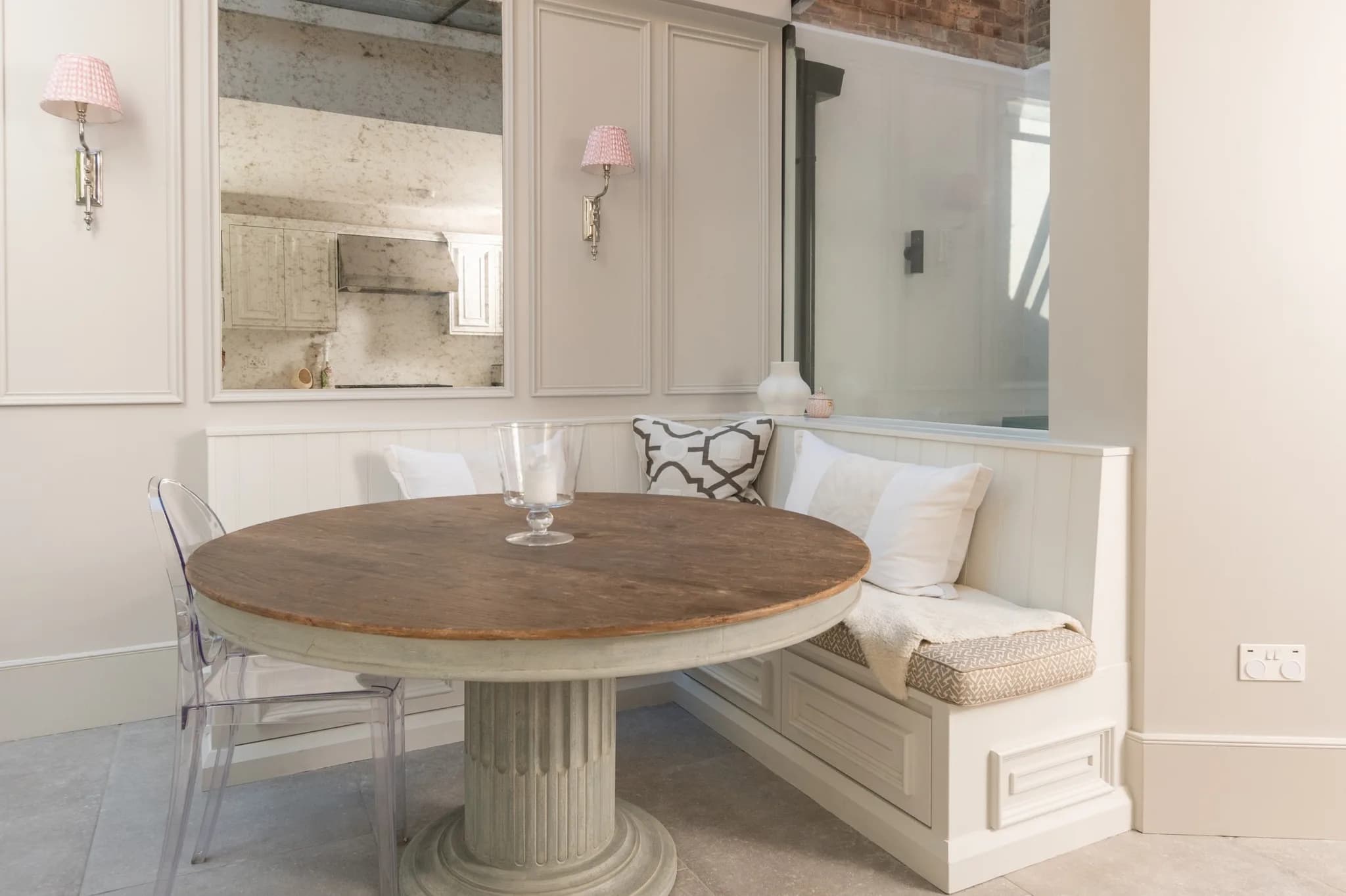
There are two quite different materials here, and they do different things. A
toughened glass splashback
is heat-resistant, seamless and easy to wipe clean, which suits the area behind a hob and a busy family kitchen. An
antique mirror splashback
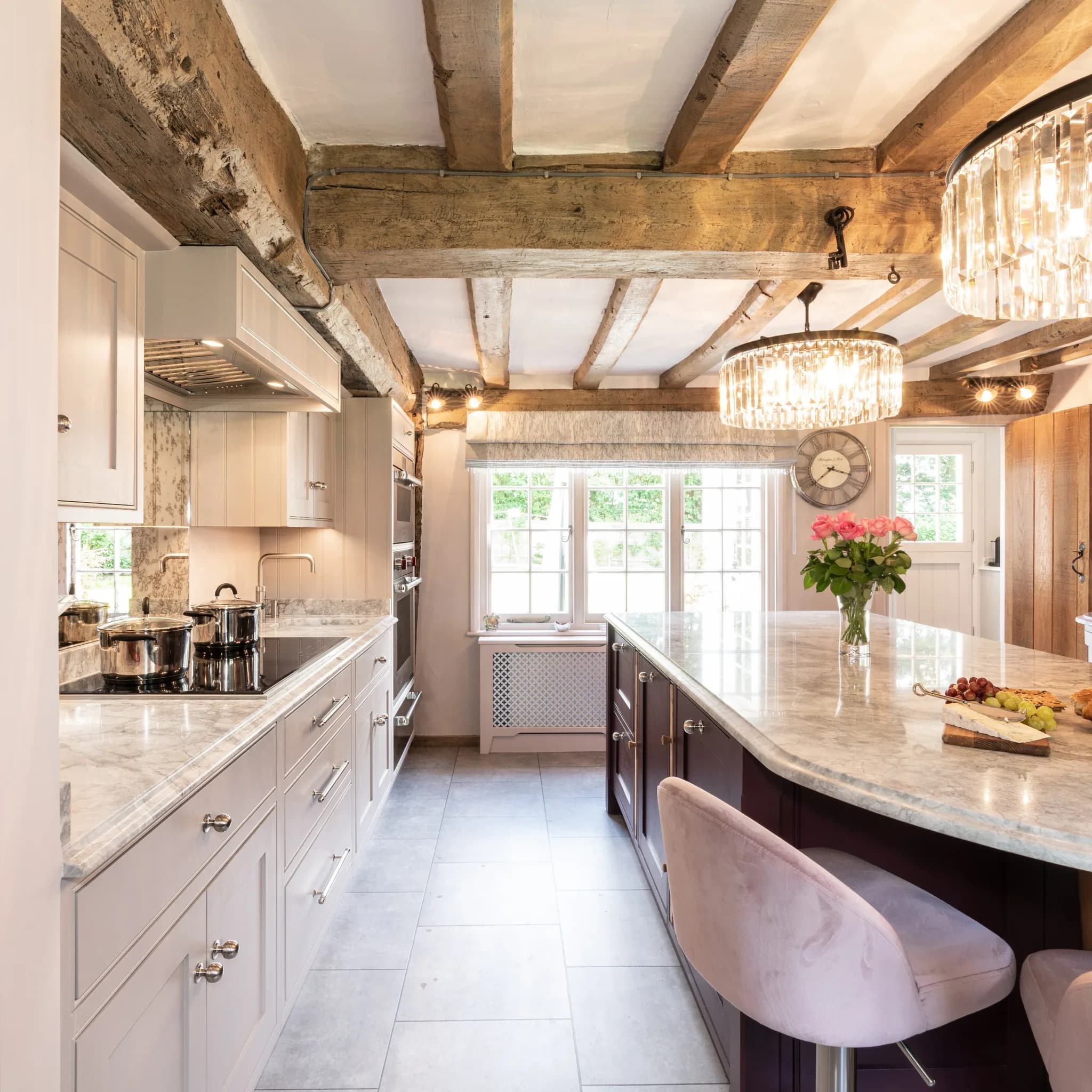
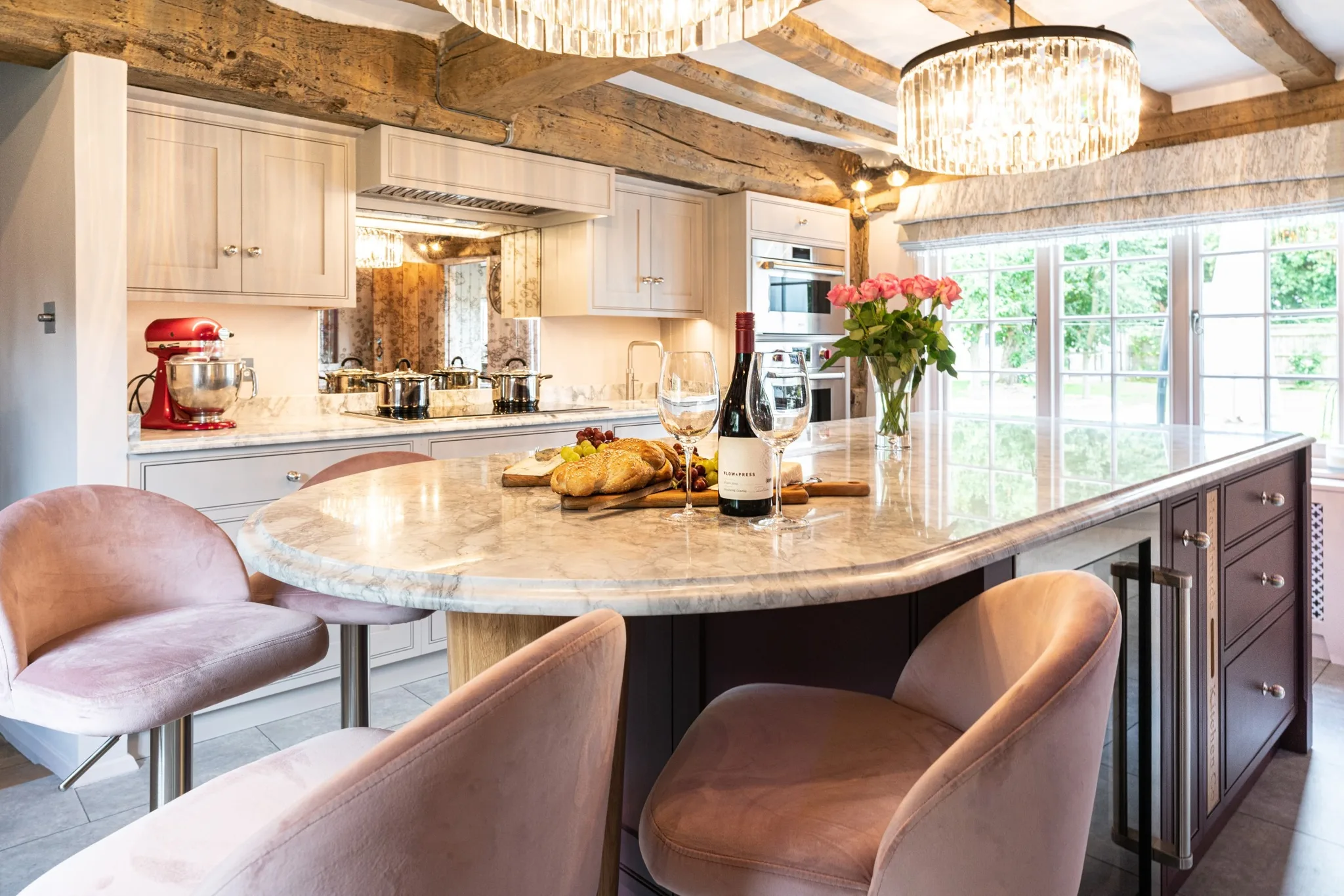
has a mottled, aged finish and reflects the room back at you. It bounces light across a smaller or darker kitchen, makes the room read as larger than it is, and lets the cook see what is going on behind them. The mottling also hides splashes, so it stays looking tidy between cleans. Mirror is best used away from the hob itself, or checked with the supplier for heat rating, since the silvering can be affected by sustained heat.
Glass surfaces: the hob and the island bar
An induction hob, such as those from
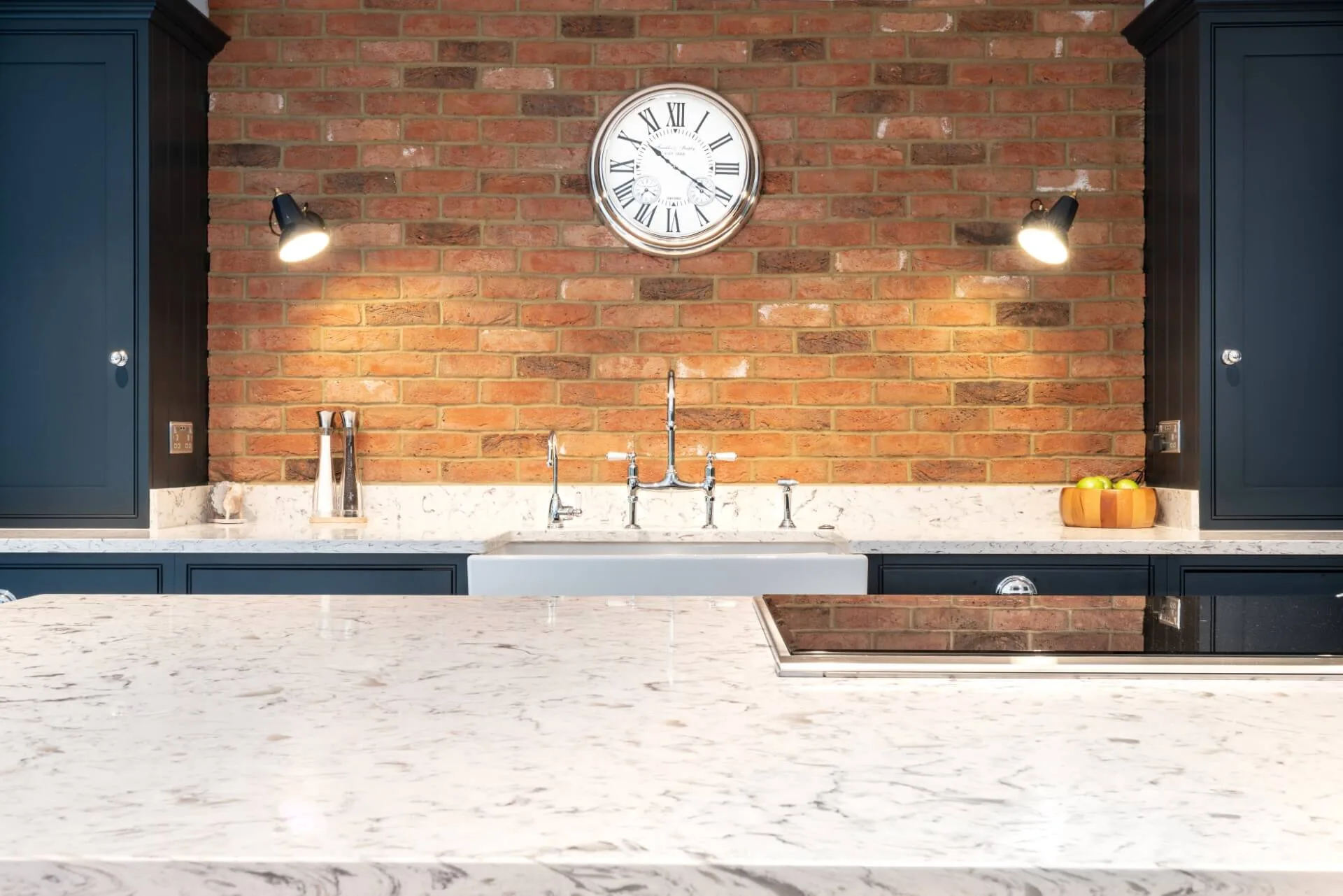
, is a glass-ceramic surface that sits flush with the worktop. It reflects light and reads as part of the work surface rather than an appliance sitting on it, which suits an island particularly well. A raised glass bar on the island is another option: a place to serve drinks while the last of the cooking is done, and a visually light element on what can otherwise be a heavy piece of furniture.
Glazed cabinets
The simplest way to bring glass into the kitchen itself is
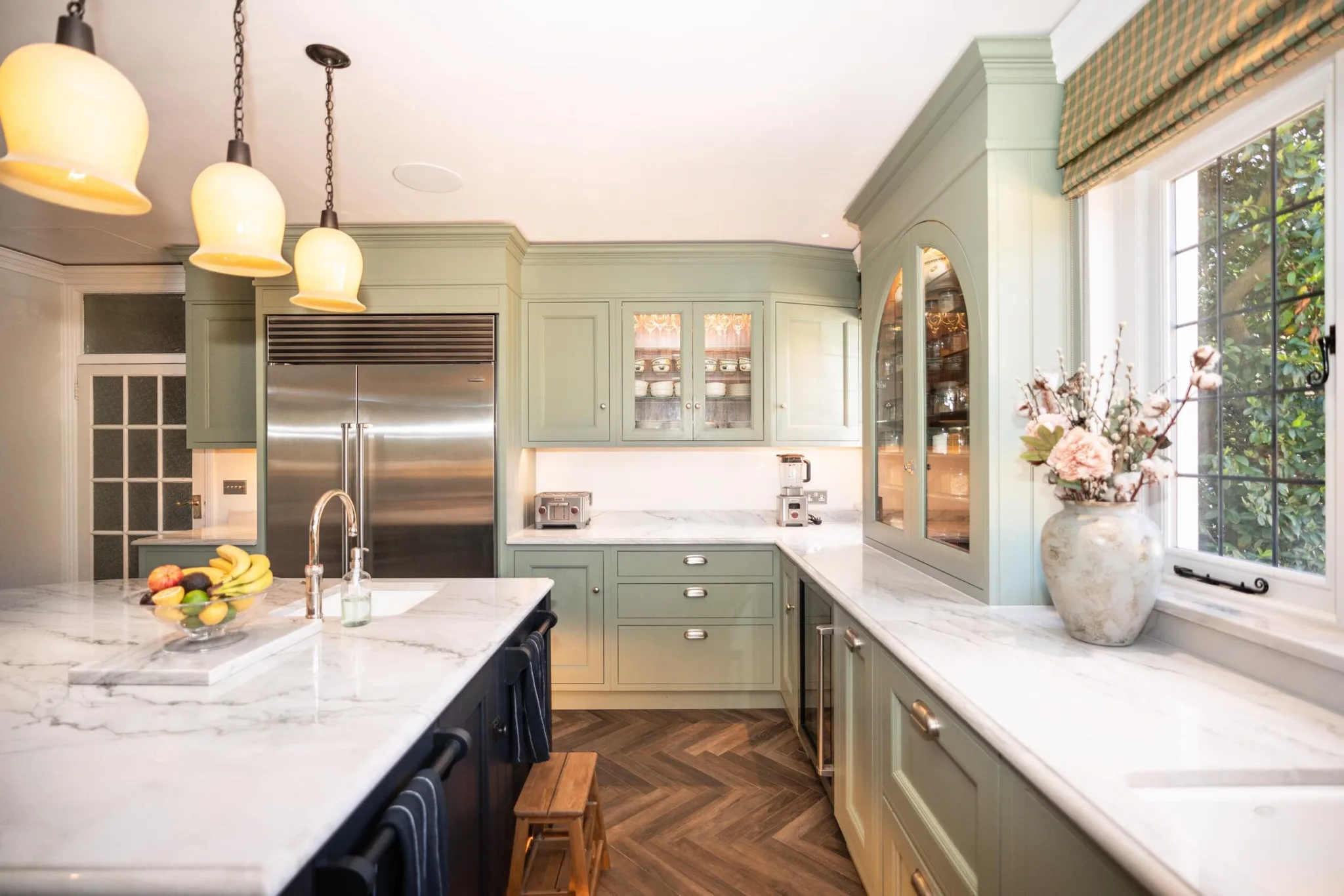
. They break up a run of solid doors and make the room feel brighter and more open. The choice of glass changes the effect. Clear glass shows everything inside, so it suits glassware and china you are happy to display. Reeded or fluted glass, with vertical grooves, blurs the contents behind it, giving privacy while still letting light through, and it catches the light attractively as you move past.
Glass in the Kitchen FAQs
Can you have a glass splashback behind a hob?
Yes, if it is toughened glass, which is made to withstand heat. It is one of the most practical materials behind a hob because it is seamless and wipes clean. Antique mirror is better placed elsewhere unless the supplier confirms it is rated for use behind a hob.
What is an antique mirror splashback?
A mirrored glass splashback with a deliberately aged, mottled finish. It reflects light and makes a room look bigger, like any mirror, but the mottling softens the reflection and disguises splashes, so it looks deliberate rather than bathroom-like.
What is the difference between reeded and clear glass cabinet doors?
Clear glass shows the contents completely. Reeded or fluted glass has vertical grooves that blur what is behind it, so you get the light and the texture without having to keep every shelf immaculate.
Where should a roof lantern go in a kitchen?
Over the area where people spend the most time, usually the island or the dining table. It is worth deciding the kitchen layout before the lantern is positioned, since moving an island afterwards is far easier on paper than moving a roof light.
Where does Handmade Kitchen Company design kitchens?
We design, hand-build and hand-paint bespoke kitchens from our workshop in Essex, for clients across Essex, Hertfordshire and North London. If you would like to know more about our bespoke handmade kitchens,
today. We look forward to hearing from you.