Pantry Cupboard Types: Bi-Fold, Pocket Door and Pull-Out
A pantry is on most people's kitchen wish list, and if there is room for one there are more ways to build it than most people realise. Not every pantry is a walk-in room. Most are cupboards, and how the cupboard opens changes how usable it is. Below are the pantry cupboard types we build, all made to order in our Essex workshop, several of which are on display at our Bridger's Barn showroom.
Pantry Cupboard Types at a Glance
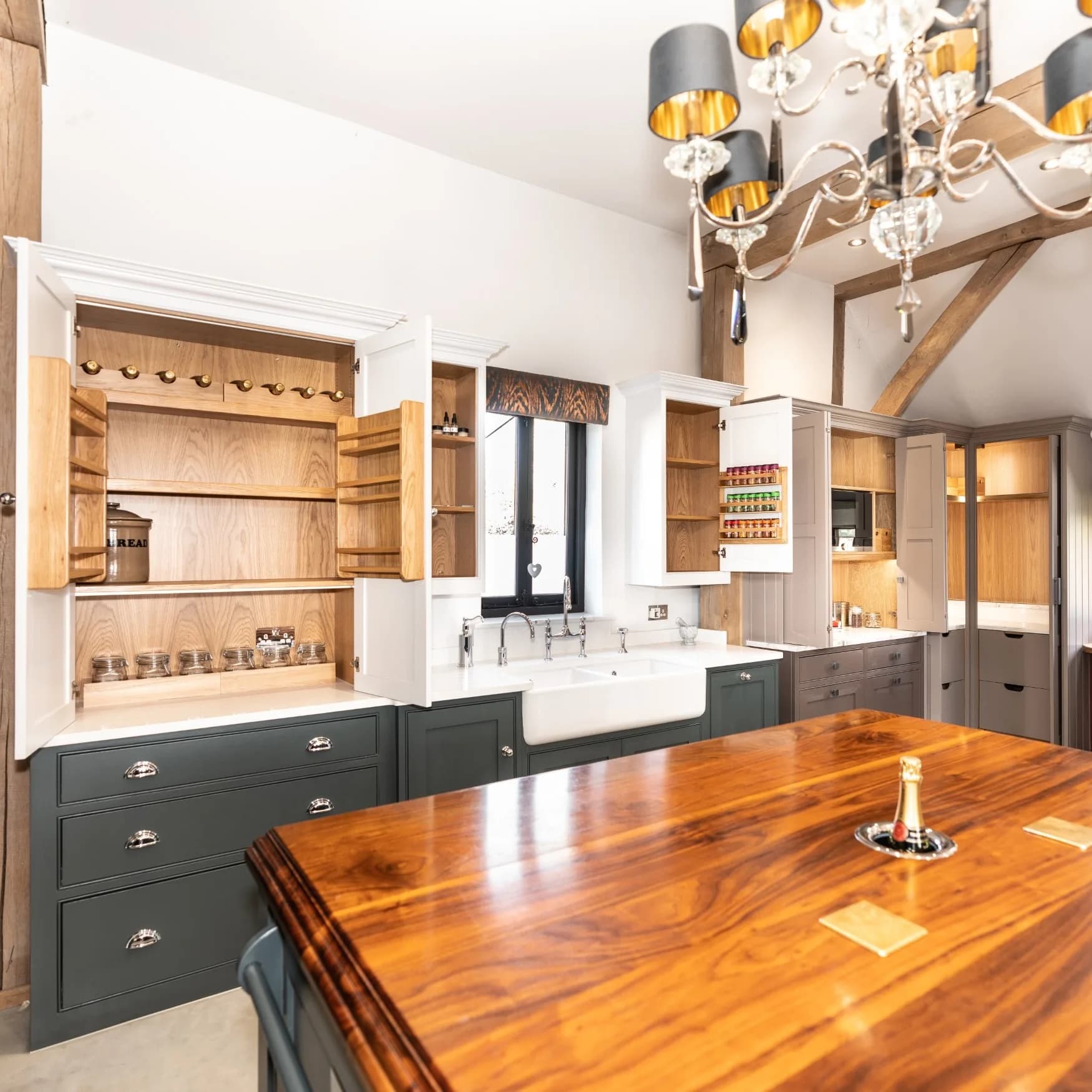
The main options are: a two-door pantry with spice racks on the doors and an integrated worktop below; a bi-fold pantry, whose doors fold back flat so they do not block the walkway while you use it; a pocket-door larder, where the doors slide away into the carcass entirely; a pull-out larder, accessible from one or both sides depending on where it sits; a wall-mounted larder cupboard for smaller runs; and a full-height pantry cupboard with revolving shelving and, if wanted, refrigeration built in. Handmade Kitchen Company hand-build all of them to suit the space.
Why the door type matters
A pantry is used with your hands full, often with the doors open for several minutes at a time. In a tight kitchen, conventional doors swing into the walkway and into whatever is either side of the unit, which is why the way it opens is worth more thought than the way it looks. Bi-fold doors fold back against themselves, so they can be left open while you work without obstructing the route past. Pocket doors go further and disappear into the carcass altogether. Both cost more than a plain hinged door, and both are worth it in a room where circulation is tight.
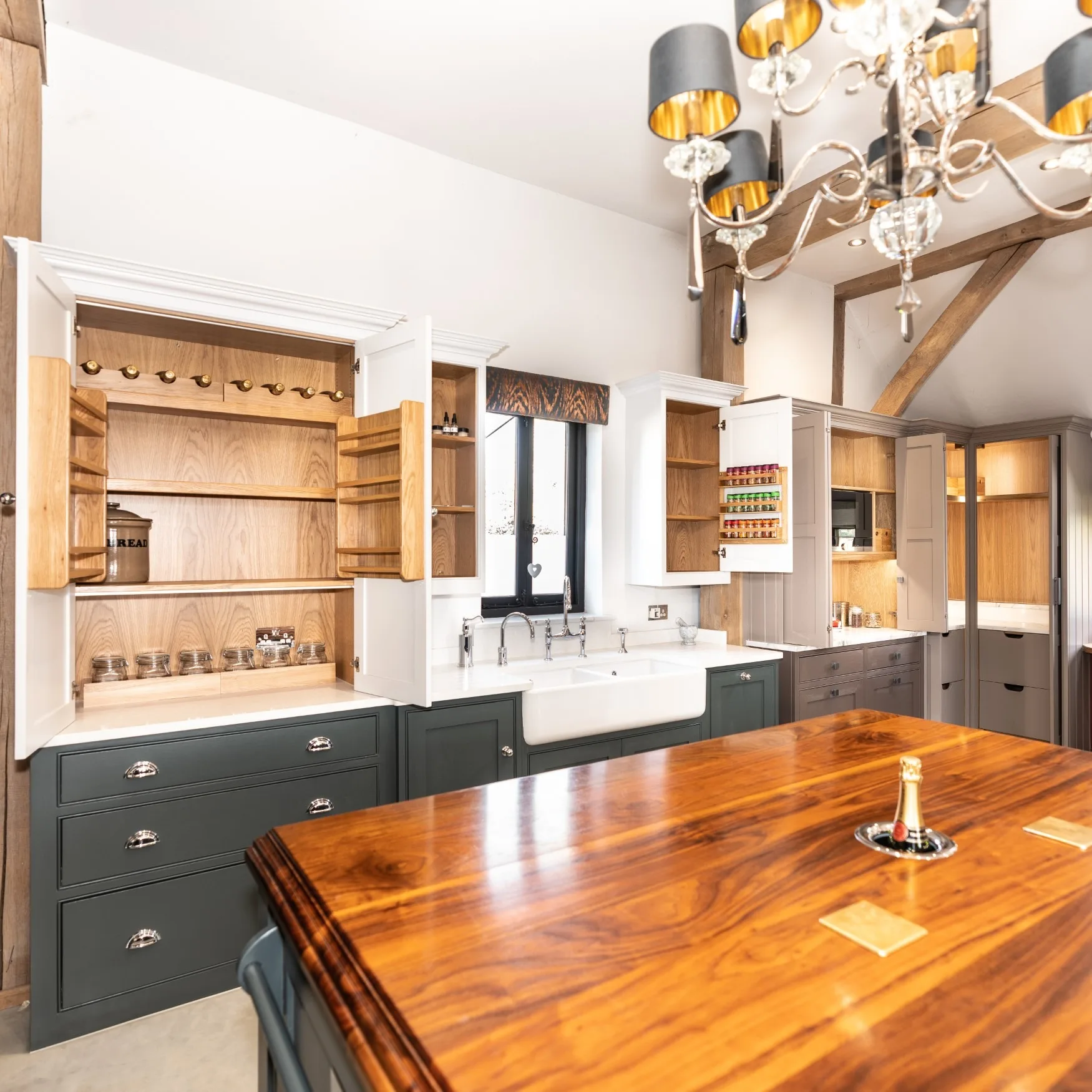
The two-door pantry
Spice racks on the inside of both doors, an integrated worktop in the base and a wine rack above. The worktop is the part people underestimate: a surface inside the pantry means small appliances can be used where they live, rather than carried out to the kitchen worktop and back.
The bi-fold pantry
The bi-fold makes an excellent
, with a coffee machine and power outlets inside for the toaster and anything else that would otherwise clutter the worktop. We continue the kitchen's quartz or granite worktop through the base, which gives a wipe-clean surface and ties it to the main run. Because the doors fold flat, the cupboard can be left open through the whole of breakfast without anyone having to edge around it.
Pocket-door and corner larders
A
hides its doors inside the unit once opened, leaving the contents completely clear. It is the neatest solution where a pantry sits in a run of cabinetry and you want no interruption at all when it is in use. Corner larders make use of the most awkward part of any kitchen. Wall-mounted larder cupboards do the same job on a smaller scale where there is no room for a full-height unit.
Pull-out larders
We build these in two forms. The shorter version fits between the worktop and a ceiling or bulkhead restriction, accessible from one side, which makes it a good answer for a corner. The taller version, which appears in a lot of our recent projects, usually sits beside the refrigerator and is accessible from both sides. The runners are smooth, soft-closing and rated to carry serious weight, so every shelf can be fully loaded with tinned goods without the unit labouring.
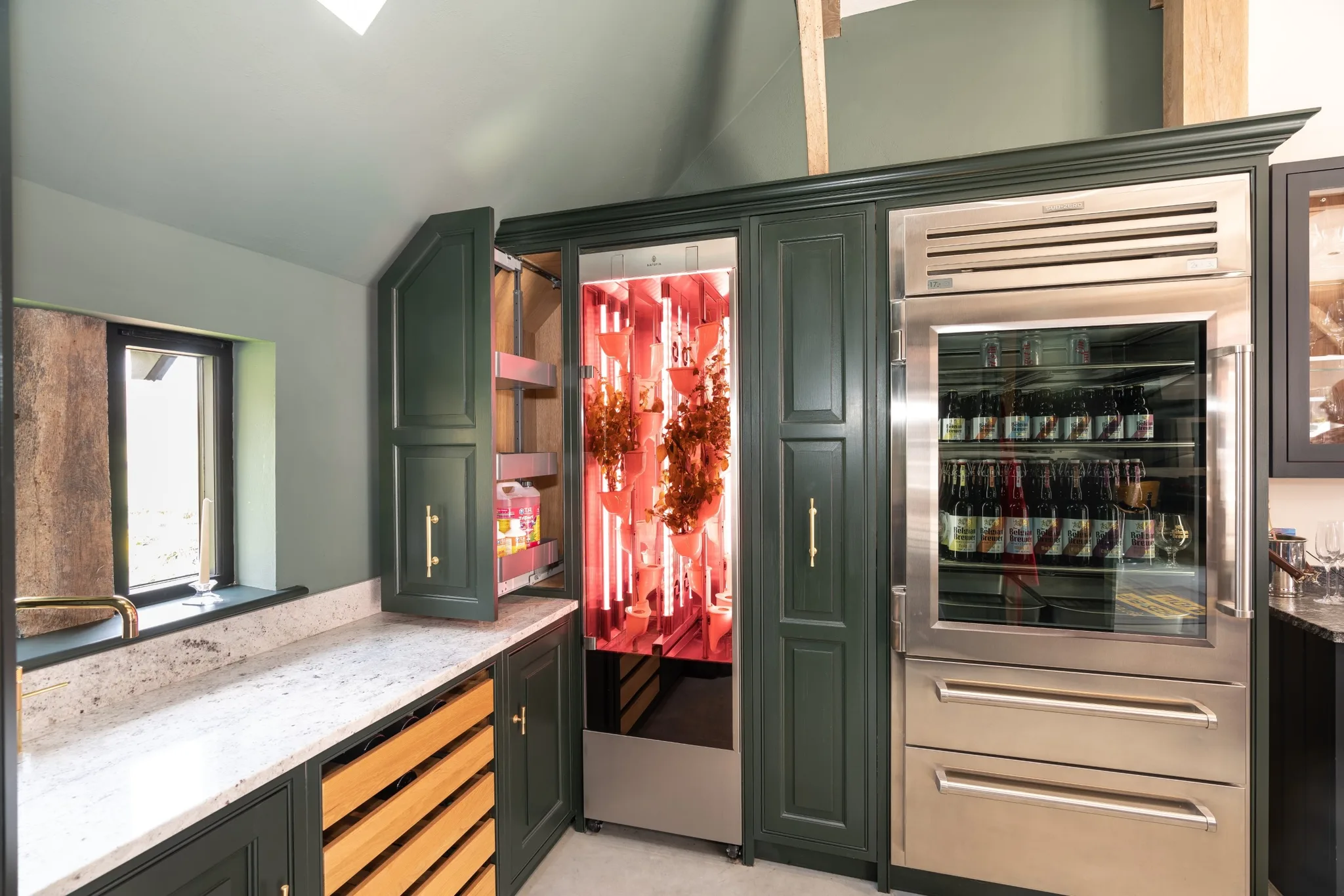
The full-height pantry cupboard
Our largest
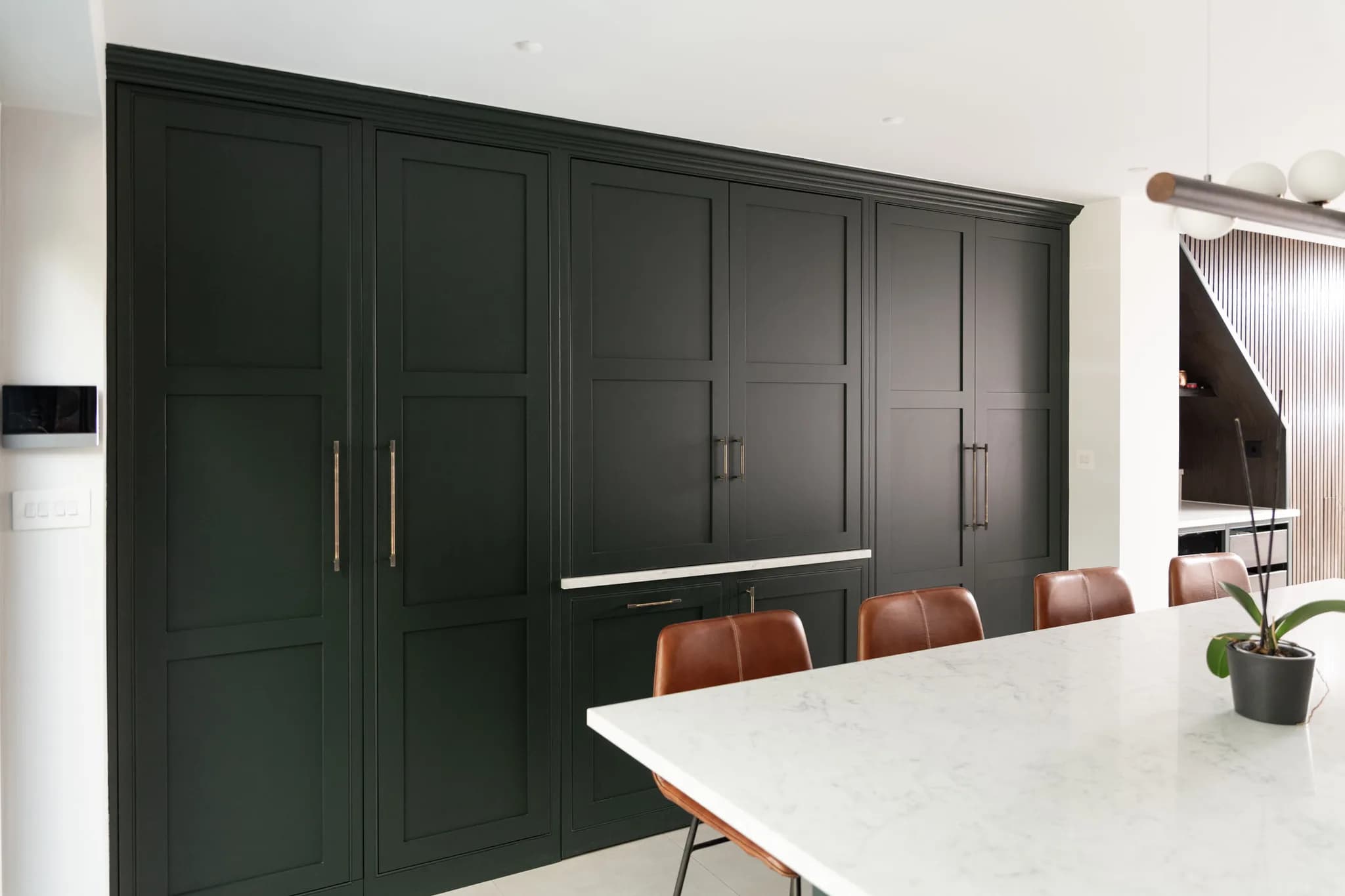
combines concealed storage with a refrigerated larder, spice racks on the backs of the doors, and shelving units that revolve to reveal further storage behind. In the showroom example the space behind houses the electrical consumer unit and the underfloor heating manifold, which is a useful demonstration of something we do often: building a pantry around services that have to stay accessible rather than boxing them in somewhere less convenient.
A short history
In Victorian Britain, large houses and estates had separate rooms dedicated to food preparation and storage, kept cool and away from the kitchen range. The modern pantry is the same idea compressed into a cupboard, and it still earns its place for the same reason.
Pantry Cupboard FAQs
What is a bi-fold pantry?
A pantry cupboard whose doors fold back on themselves rather than swinging out. It means the cupboard can be left open while in use without blocking the walkway or the cabinets either side, which suits a breakfast pantry used every morning.
What is a pocket-door larder?
One where the doors slide back into the body of the unit once opened, disappearing entirely. It gives completely unobstructed access to the contents and leaves the cabinetry run looking uninterrupted when open.
Should a pantry have a worktop inside it?
If you plan to keep appliances in there, yes. A worktop inside the pantry means the coffee machine or toaster is used where it is stored, with power laid on, instead of being lifted in and out. Continuing the kitchen's own worktop material through gives a wipe-clean surface that matches.
Do I need a walk-in pantry, or will a cupboard do?
A cupboard suits most kitchens and takes no floor space away from the room. A
makes sense where you have a room or recess to give over to it and you are storing in bulk.
Can I see these in person?
Yes. Several pantry configurations are on display at our Bridger's Barn showroom near Bishop's Stortford, and displays are refreshed periodically, so it is worth booking an appointment to see what is currently built.
today to book a showroom appointment and see the pantry options in person. We look forward to hearing from you.